
Kenya
Tsavo National Park
Red elephants and Kenya's biggest wilderness
About Tsavo National Park
Tsavo — split into East and West — is Kenya's largest park, famous for its "red elephants" dusted in ochre earth and for a genuine sense of wilderness on safari.
Tsavo West hides the crystal-clear Mzima Springs, where hippos hang in glassy water, plus lava flows and rhino sanctuary country; Tsavo East is open savannah with big herds along the Galana River. Sitting on the Nairobi–Mombasa route, Tsavo is the natural safari-to-beach bridge.
Wildlife
What You'll See
- Elephant
- Lion
- Black Rhino
- Hippo
- Lesser Kudu
- Crocodile
Activities
What You Can Do
- Game drives
- Mzima Springs walk
- Lava-flow scenery
- Safari-to-coast combos
Red earth
Tsavo: Kenya's Vast, Wild Interior
Tsavo is enormous — East and West combined form one of the largest protected areas in the world and cover a substantial share of Kenya's total park estate. It is also, thanks to its size, one of the emptiest. Where the Masai Mara can feel crowded, Tsavo can feel like the last place on earth.
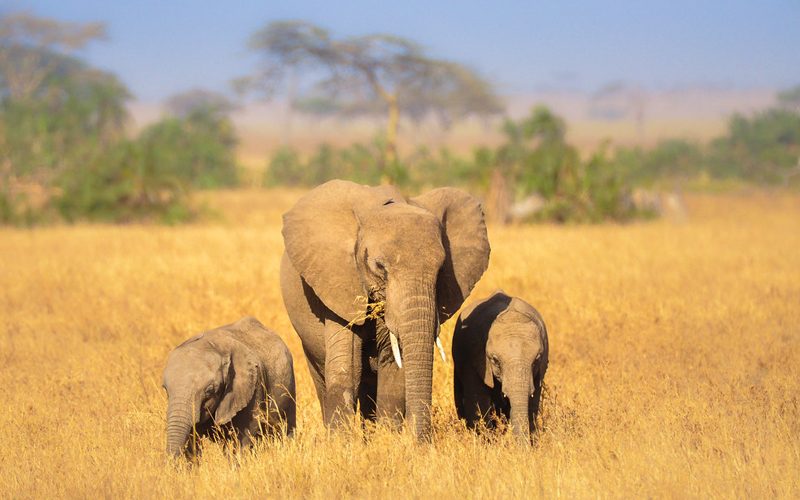
The defining image is red. The soil here is iron-rich, and Tsavo's elephants dust-bathe in it constantly, turning themselves a deep ochre that no other population shares. Herds of these red elephants moving through open thornbush is the park's signature sight.
Tsavo East is flat, dry and vast, dominated by the Galana River and the Yatta Plateau, one of the world's longest lava flows. Tsavo West is greener, hillier and more varied, and holds the park's best-known attraction: Mzima Springs, where fifty million gallons of filtered water surface daily from beneath the Chyulu Hills, with an underwater viewing chamber for watching hippo and barbel. The park's lions carry a grim historical fame from the man-eaters of Tsavo in 1898.
What you see
Tsavo Highlights
Red elephants
Dust-bathing in iron-rich soil turns Tsavo's elephants a deep ochre unique to this population. Large herds are common.
Mzima Springs
Crystal-clear water surfacing from beneath the Chyulu Hills, with an underwater viewing chamber for hippo and shoals of barbel.
Genuine space
One of the largest protected areas on earth, with very few vehicles. Sightings are almost always yours alone.
Convenient from the coast
Tsavo sits between Nairobi and Mombasa, making it the obvious safari addition to a Kenyan beach holiday.
Planning
Tsavo FAQs
Tsavo East or Tsavo West?
West for scenery and variety — hills, Mzima Springs, volcanic landscapes and more habitat diversity, though the thicker bush makes game harder to spot. East for open plains, easier game viewing and the classic red elephant herds along the Galana River. Many itineraries take in both, since they adjoin, and the contrast between them is part of the appeal.
Is Tsavo good for game viewing?
Good, but not on Mara terms. The vegetation is thicker and the animals more dispersed across an enormous area, so densities are lower and sightings take more work. What you get instead is space, solitude and a genuinely wild feel. Visitors who dislike vehicle crowds often prefer it; those wanting guaranteed big cat encounters should go to the Mara.
When should I visit Tsavo?
June to October and January to February, the dry seasons, when game concentrates at water sources and the bush thins out. Tsavo is hot lowland country year-round. The rains in November and from March to May bring lush growth and excellent birding, but tall grass and thick bush make wildlife much harder to find.
Let's plan together
Ready to Experience Tanzania?
Tell us your dates and dreams — our Arusha team will craft a private itinerary within 24 hours.
